

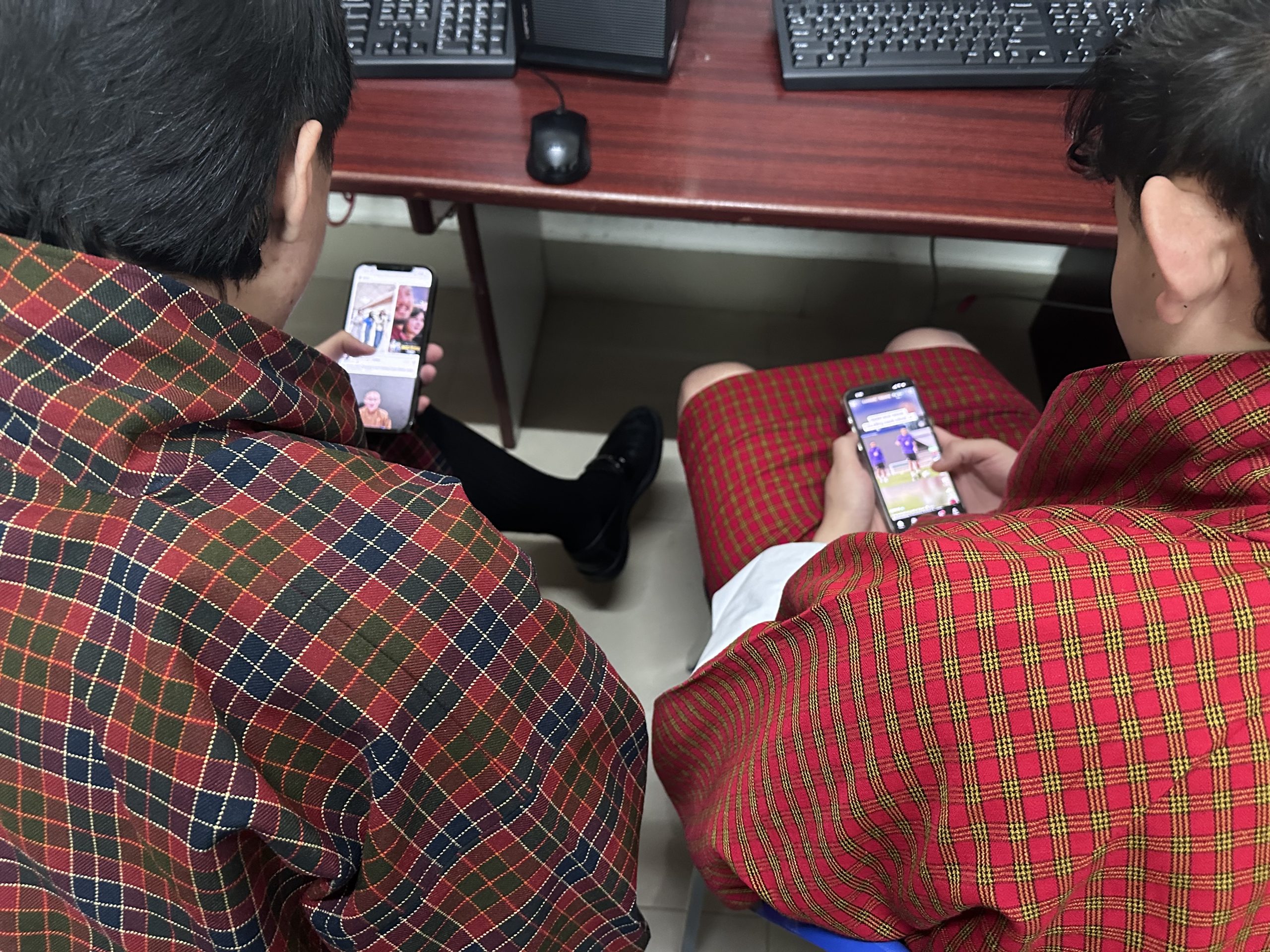
THIMPHU: Social media has become an important part of teenagers’ daily lives, providing entertainment, communication, and access to information. However, excessive use of platforms such as TikTok, Instagram, and Facebook may affect students’ sleeping habits, study time, and physical activities.
Many teenagers spend a significant amount of their free time scrolling through social media. While these platforms help students stay connected with friends and follow current trends, spending too much time online can make it difficult to maintain a balanced daily routine.
Phub Lham, a student, shared her experience of using social media and how it can affect everyday activities.
“I usually check social media when I am studying or before going to bed. Sometimes, I end up spending much more time on it than I originally planned,” Phub Lham said.
Her experience reflects a common concern among students who find it difficult to limit their screen time. What begins as a few minutes of checking notifications or watching videos can turn into hours of scrolling, leaving less time for other responsibilities.
Sleep is one area that may be affected by excessive social media use. Teenagers who use their phones late at night may delay their bedtime, resulting in insufficient rest. Poor sleeping habits can leave students feeling tired the next morning and make it harder for them to concentrate during classes.
Social media can also influence students’ academic routines. Notifications, messages, and entertaining videos may interrupt study sessions and reduce concentration. Students may take frequent breaks to check their phones, making it harder to complete assignments and prepare for examinations on time.
“I think we need to control how much time we spend on social media because it can easily become a habit,” Phub Lham said.
Apart from sleep and studies, physical activity is another important part of a teenager’s routine. Spending long periods on social media can reduce the time available for exercise, outdoor activities, and face-to-face interactions. However, social media can also encourage positive habits by providing workout ideas, educational content, and opportunities to connect with people who share similar interests.
The impact of social media therefore depends on how teenagers use these platforms and whether they can maintain a healthy balance between online and offline activities.
Developing better screen-time habits can help students manage their daily responsibilities. Setting a time limit for social media, keeping phones away while studying, and avoiding screen use before bedtime are some practical ways to improve daily routines. Making time for exercise and other hobbies can also help teenagers maintain a healthier lifestyle.
Parents and teachers can support students by encouraging responsible social media use rather than simply restricting access to digital platforms. Open discussions about screen time, sleep, and academic responsibilities can help teenagers understand the importance of managing their online activities.
As social media continues to play a major role in young people’s lives, maintaining a balance between digital entertainment and everyday responsibilities remains important. Responsible use can allow teenagers to enjoy the benefits of social media without allowing it to interfere with their sleep, education, and physical well-being.

















Leave a Reply