


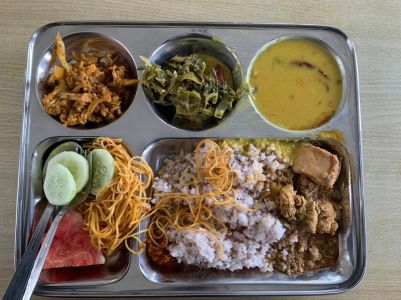
For many students at Royal Thimphu College (RTC), the canteen is an important place to have lunch, grab snacks and spend time with friends between classes. However, the affordability of canteen food remains an important issue, especially for students who depend on a limited daily allowance.
On October 1, 2026, Royal Thimphu College announced on its official Facebook page that a canteen renewal agreement had been signed by the college President, Dining and Canteen Committee, and the vendor. The agreement reflects the college’s continued efforts to provide food services to students and staff.
According to RTC’s 2024 canteen tender document, food prices are not decided by the contractor alone. Instead, the prices must be mutually agreed upon between the college and the canteen operator.
The document states that pricing should consider the discounted rental charges, the regular student customer base and prevailing market conditions. The contractor must also obtain approval before introducing prices for new food items.
The tender document specifies a discounted monthly rent of Nu. 25,000 for the wet and dry canteen facilities. This arrangement is intended to help the operator provide quality food at reasonable prices.
However, the actual affordability of meals depends on how much students spend and the amount of money they receive from their families.
“I am a resident student and I usually eat lunch from canteen. I usually spend around Nu.150 to 200 for my lunch. i feel the prices for food here is a little expensive proved that its a college canteen and not a fancy restaurant,” said Yeatsho Lhamo Dorji, a third year student at RTC.
For students who regularly purchase meals and snacks, even small differences in food prices can affect their weekly or monthly expenses.
From the business perspective, running a college canteen involves several expenses, including purchasing ingredients, paying employees, electricity bills, maintaining equipment and ensuring food hygiene.
“Usually the prices are first quoted by us but later the prices are negotiated by the vendor and the college” said Sonam Jamtso, the RTC canteen operator.
The college’s tender document also provides for food prices to be reviewed annually during the fall semester, depending on market conditions, after the contractor completes the probation period.
Furthermore, the RTC Canteen Monitoring Committee is responsible for collecting feedback and reviewing the operator’s performance. The tender requires approved menu prices to be displayed prominently for customers.
While the college has established guidelines for reasonable pricing, the question of affordability ultimately depends on students’ experiences and purchasing power.
As RTC continues its partnership with the canteen operator, maintaining a balance between affordable prices, good food quality and sustainable business operations will remain important.
For students, an affordable canteen is not simply about cheaper food. It is about having access to nutritious, satisfying meals without putting unnecessary pressure on their daily budgets.


















Leave a Reply