

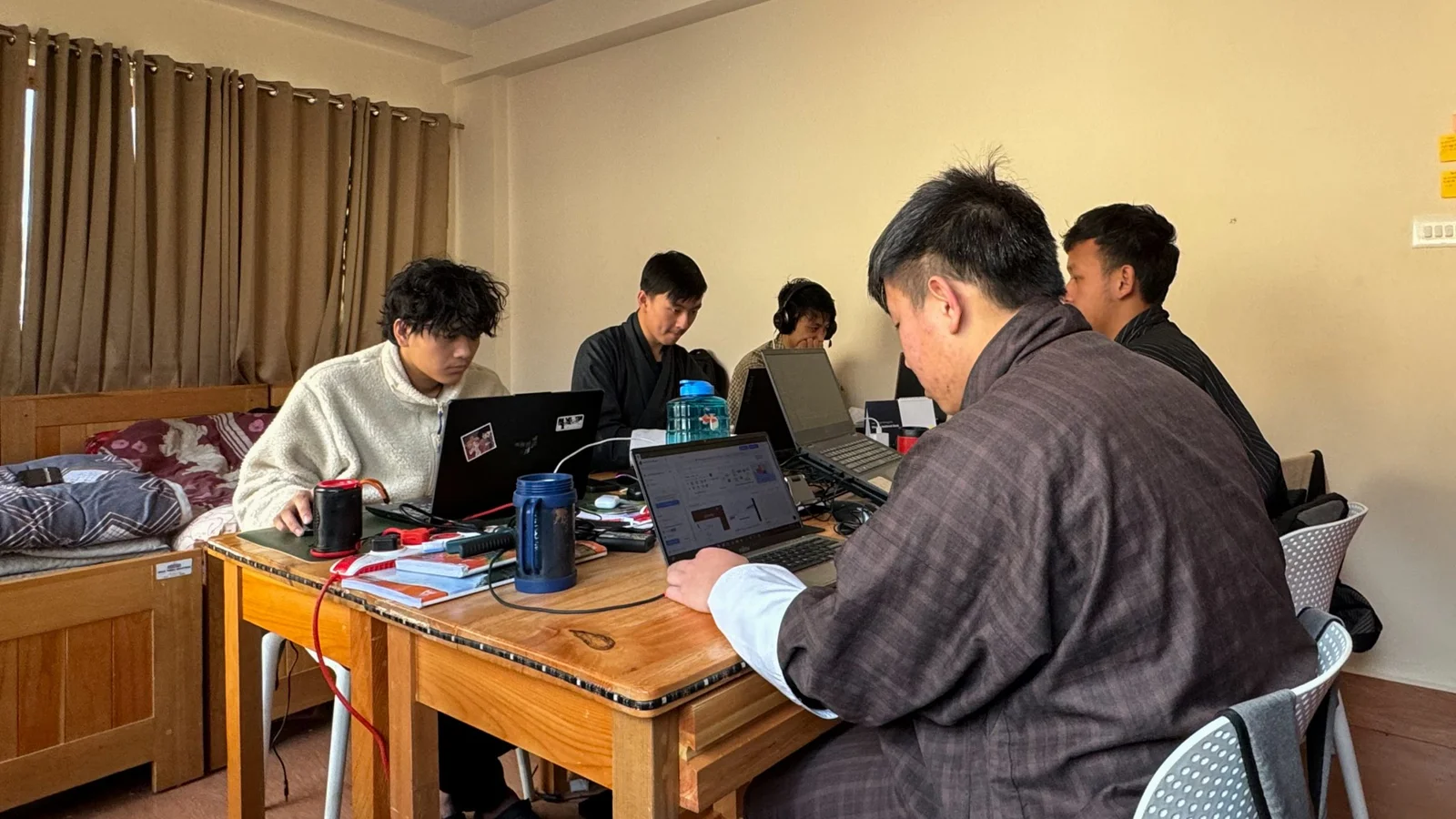
As Artificial Intelligence continues to become part of everyday life, Bhutanese developers are working to make the technology understand and communicate in the country’s own languages.
The effort is being led by local technology initiatives including NoMind and its research arm, Aplos Lab, which are developing AI models that can work with Dzongkha and other Bhutanese languages. The project aims to make AI more relevant to Bhutanese users while also creating a digital space for languages that have limited representation online.
According to reports, Ugyen Dendup, founder of NoMind, has been involved in developing AI models for Dzongkha, Tshangla, Bumthapkha and Kurtoepkha. The project includes tools such as Dotu, a speech and voice model, and Lotsawa, a translation model.
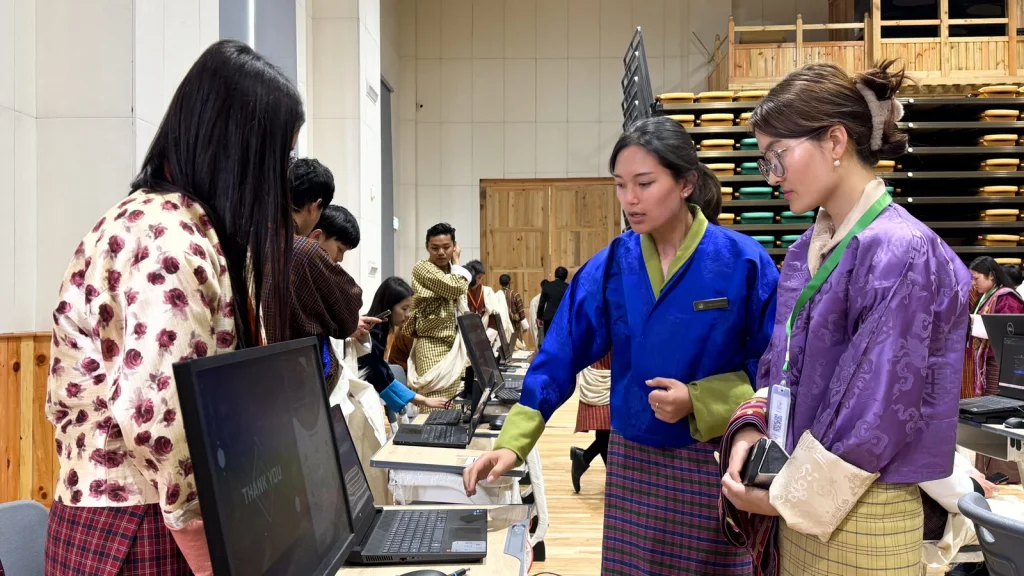
The development has also been featured at the AI4Tarayana Challenge 2026 organised by Gyalpozhing College of Information Technology (GCIT). Aplos Lab was among the top three teams in the competition with a multilingual AI model designed to support text and voice interactions.
For students, the development could provide another way of accessing information and learning materials. AI that understands Bhutanese languages could potentially help students translate content, learn new vocabulary, understand difficult topics and communicate more easily in their local language.
The technology may also have a wider role in preserving Bhutan’s languages. Much of the digital world is dominated by widely spoken languages such as English. Increasing the presence of Dzongkha and other Bhutanese languages in AI could encourage younger generations to use them in digital spaces.
However, creating AI for Bhutanese languages is not without challenges. AI systems need large amounts of reliable language data to learn effectively. Some Bhutanese languages have limited digital resources, while differences in pronunciation, vocabulary, expressions and cultural meaning can make language technology more difficult to develop.
The government has also been working to support the collection of language data. GovTech Bhutan’s Tsig language data collection platform is intended to collect high-quality conversational and annotated data that can support AI research involving Dzongkha and other Bhutanese languages.
The development of local-language AI also raises questions about accuracy and responsible use. While AI can provide quick information, users may still need to check its responses, particularly when using it for academic work or important information.
For Bhutan, the development of AI in local languages is therefore more than a technological project. It represents an effort to ensure that the country’s languages and culture are also part of the digital future.
As AI continues to develop, the success of these initiatives could determine how effectively Bhutanese languages are carried from traditional forms of communication into the rapidly changing digital world.








Leave a Reply